Let’s be honest, stepping into the world of credit cards can feel like trying to read a map in a foreign language. I remember my first time. I was in college, and every bank was throwing offers at me—0% APR this, 5x points that. It was a whirlwind of jargon and promises, and I honestly had no clue what any of it meant. I just picked the one with the coolest-looking card (a terrible strategy, by the way). It took me years of trial, error, and a few unnecessary fees to finally get the hang of it. That’s why I’ve put together this ultimate credit card guide for 2026. My goal is to cut through the noise and give you the straightforward, no-fluff advice I wish I had back then. We’re going to break down everything from how to choose a credit card to using it wisely, so you can feel confident with every single swipe.
Table of Contents
- Understanding the Basics: What Exactly is a Credit Card?
- The Different Flavors of Plastic: Types of Credit Cards
- How to Choose a Credit Card: A Step-by-Step Guide
- Comparison: Cashback vs. Travel Rewards Cards
- The Nitty-Gritty: Understanding Credit Card Terms
- Credit Card Tips for Smart Swiping
- Comparison: Top Balance Transfer Cards
- Building a Strong Credit History with Your Card
- Frequently Asked Questions (FAQ)
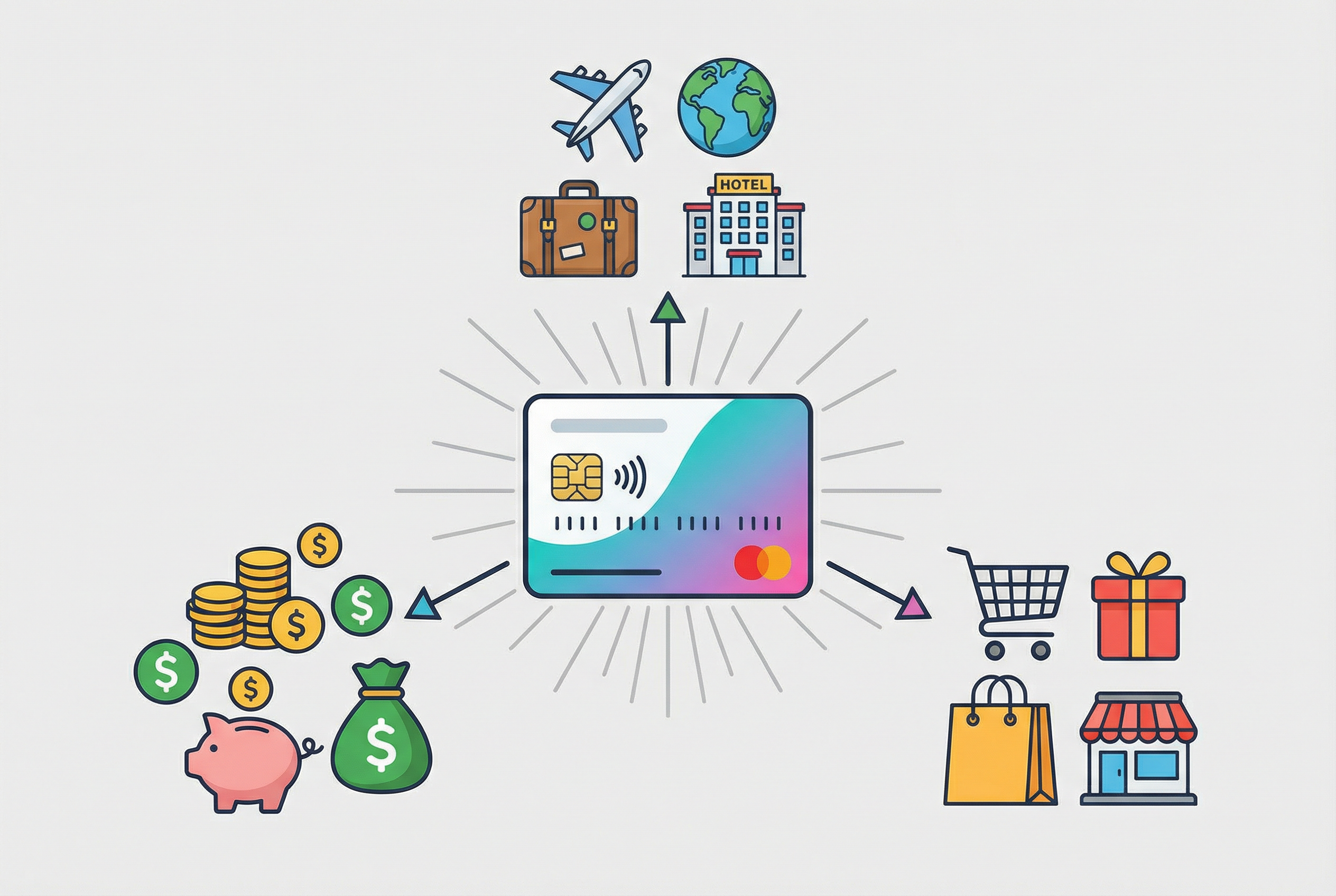
Understanding the Basics: What Exactly is a Credit Card?
Look, let’s strip it all down. A credit card is, at its core, a simple tool. It’s a piece of plastic (or metal, if you’re fancy) that lets you borrow money from a bank to make purchases. Think of it as a flexible, short-term loan. When you swipe your card, the bank pays the merchant on your behalf, and you owe the bank that money back. At the end of each month, you get a bill. If you pay the entire bill by the due date, you pay no extra charges. You essentially got a free, convenient loan for a few weeks. If you don’t pay it all back, the bank starts charging you interest on the remaining amount. That’s the catch, and it’s where people get into trouble.
When I first started, I treated my credit card like free money. Big mistake. I’d buy a round of drinks for my friends, thinking, “I’ll deal with it later.” But “later” comes with interest, and it adds up faster than you’d think. The key is to see it not as an extension of your income, but as a different way to pay with the money you already have. It’s a tool for convenience and, if used correctly, for building your financial future.
The Different Flavors of Plastic: Types of Credit Cards
Not all credit cards are created equal. They come in a bunch of different “flavors,” each designed for a different type of person and a different set of goals. Finding the right one is like picking the right tool for a job—you wouldn’t use a hammer to saw a piece of wood. This is a crucial part of any good credit card guide.
Rewards Credit Cards: Earning While You Spend
This is where things get fun. Rewards cards give you something back for every dollar you spend. It’s like getting a small discount on life. These rewards typically come in three forms: cashback, points, or travel miles.
- Cashback Cards: These are the most straightforward. You get a percentage of your spending back as cash. For example, a card might offer 2% cashback on all purchases. If you spend $1,000, you get $20 back. Simple as that.
- Travel Rewards Cards: If you’ve got the travel bug, these are for you. You earn points or miles that can be redeemed for flights, hotel stays, and other travel-related expenses. Some of the best credit cards for travel rewards can get you halfway to a free vacation just with their sign-up bonus.
- Points Cards: These are a bit of a hybrid. You earn points that can often be redeemed for a variety of things, including cash, gift cards, merchandise, or travel. They offer flexibility but sometimes require a bit more work to maximize their value.
Building and Rebuilding: Secured and Student Cards
What if you have no credit history or a less-than-perfect one? Don’t worry, there are cards for you, too. These are designed to help you get on the financial ladder.
- Secured Cards: These are the perfect starting point for building credit. You provide a small security deposit (usually a few hundred dollars), and that amount typically becomes your credit limit. You use it like a regular credit card, and by making on-time payments, you prove your creditworthiness to the lenders. After a while, you can often graduate to an unsecured card and get your deposit back.
- Student Cards: Designed specifically for college students, these cards are easier to qualify for and often come with perks tailored to student life, like rewards for good grades. They are a great way to start building a credit history early on. If you’re just starting, our ultimate guide to building credit is a great next step.
For the Business-Minded: Business Credit Cards
If you run a small business, even a side hustle, a business credit card is a must. It helps you separate your business and personal expenses, which makes tax time a whole lot easier. Plus, they often come with higher credit limits and rewards tailored to business spending, like extra points on office supplies or advertising. Check out a small business credit card guide to see how you can maximize these benefits.

How to Choose a Credit Card: A Step-by-Step Guide
Alright, now for the main event: how to choose a credit card. It’s not as scary as it seems. It really just boils down to a little self-reflection and some comparison shopping.
Step 1: Assess Your Credit Score
Before you even start looking at cards, you need to know where you stand. Your credit score is the number one factor that determines which cards you can qualify for. You can get your credit score for free from services like Credit Karma or directly from your bank. Scores generally range from 300 to 850. A score above 700 is generally considered good, and it will open up the most options for you.
Step 2: Define Your Spending Habits and Goals
This is where you need to be honest with yourself. Where does your money go each month? Are you a homebody who spends a lot on groceries and streaming services? Or are you a road warrior who’s constantly buying plane tickets and eating out? Your spending habits will point you to the right type of rewards. If you spend $500 a month on groceries, a card that offers 5% back on groceries is a no-brainer. If you never travel, a premium travel card with a high annual fee makes no sense.
Step 3: Compare, Compare, Compare!
Once you know your score and your spending style, it’s time to start the credit card comparison. Don’t just jump on the first offer you see. Look at the details: the sign-up bonus, the rewards rate, the annual fee, and the interest rate (APR). A huge sign-up bonus might be tempting, but if the card has a high annual fee and rewards that don’t match your spending, it might not be worth it in the long run.
Comparison: Cashback vs. Travel Rewards Cards
To give you a better idea, let’s compare two popular types of cards. This is a classic showdown: the simple cashback card versus the glamorous travel card.
| Feature | Example Cashback Card (e.g., “Cash is King Card”) | Example Travel Card (e.g., “Wanderlust Rewards Card”) |
|---|---|---|
| Annual Fee | $0 | $95 |
| Sign-Up Bonus | $200 cash back after spending $1,000 in 3 months | 60,000 bonus points after spending $4,000 in 3 months |
| Rewards Rate | 2% cashback on all purchases | 5x points on travel, 3x on dining, 1x on everything else |
| Key Perk | Simplicity. The rewards are easy to understand and redeem. | Points are worth more when redeemed for travel. Access to travel partners. |
The Nitty-Gritty: Understanding Credit Card Terms
The fine print on credit card applications can be intimidating. But there are really only a few key terms you need to understand to be a savvy consumer.
APRs and Interest Rates: What You’re Really Paying
APR stands for Annual Percentage Rate. It’s the interest you’re charged over a year on any balance you carry. Here’s the thing: if you pay your bill in full every month, the APR doesn’t matter. It could be 99%, and you wouldn’t pay a dime in interest. But the moment you carry a balance, the APR becomes critically important. Many cards offer a 0% introductory APR for a year or more. This can be a great deal if you have a large purchase to make, but just be sure you can pay it off before the introductory period ends and the regular, much higher, APR kicks in.
Fees, Fees, and More Fees
Credit card companies can be sneaky with fees. Here are the most common ones to watch out for:
- Annual Fee: Some cards, especially premium travel cards, charge you a fee just for having the card. Make sure the perks and rewards you get are worth more than the fee you’re paying.
- Late Payment Fee: If you miss your payment due date, you’ll get hit with a fee. Always pay on time, even if it’s just the minimum payment.
- Foreign Transaction Fee: If you travel abroad, some cards charge a fee (usually around 3%) on every purchase you make in a foreign currency. If you travel often, getting a card with no foreign transaction fees is a must. You can find some great options in this list of top no foreign transaction fee credit cards.
Credit Card Tips for Smart Swiping
Okay, you’ve chosen your card. Now, how do you use it without falling into debt? Here are some essential credit card tips.
Pay Your Balance in Full, Every Month
I’m going to say it again because it’s that important. This is the golden rule. If you do this one thing, you will never pay a penny in interest, and you’ll be using your credit card to your advantage. Treat it like a debit card; only spend what you can afford to pay off.
Keep Your Credit Utilization Low
Your credit utilization ratio is the amount of credit you’re using compared to your total credit limit. For example, if you have a $1,000 credit limit and a $300 balance, your utilization is 30%. You want to keep this number as low as possible, ideally below 30%. High utilization can hurt your credit score.
Don’t Be Afraid to Ask for a Higher Credit Limit
This might sound counterintuitive, but a higher credit limit can actually help your credit score. Why? Because it lowers your credit utilization ratio. If you have a $300 balance on a $1,000 limit (30% utilization) and your limit gets increased to $2,000, your utilization instantly drops to 15%. Just be disciplined enough not to spend the extra credit.
Comparison: Top Balance Transfer Cards
If you already have some credit card debt, a balance transfer card can be a lifesaver. These cards offer a 0% introductory APR on balances you transfer from other cards, giving you time to pay off your debt without accumulating more interest.
| Feature | Example Card A (e.g., “Debt Crusher Card”) | Example Card B (e.g., “Fresh Start Card”) |
|---|---|---|
| Introductory APR | 0% for 21 months on balance transfers | 0% for 18 months on balance transfers and purchases |
| Balance Transfer Fee | 5% of the transferred amount | 3% of the transferred amount |
| Regular APR | 16.99% – 26.99% variable | 17.49% – 27.49% variable |
| Best For | Someone who needs the longest possible time to pay off a large balance. | Someone who wants to pay off existing debt and make new purchases without interest. |
Building a Strong Credit History with Your Card
Using a credit card responsibly is one of the best and fastest ways to build a strong credit history. A good credit score is more than just a number; it’s your key to getting approved for car loans, mortgages, and even apartments. It can save you thousands of dollars in interest over your lifetime. By following the tips in this guide—paying on time, keeping your balances low, and choosing the right card for you—you’re not just managing your spending; you’re investing in your financial future. If you want to dive deeper, learn how to build credit fast in 2026 with the right strategies.

Frequently Asked Questions (FAQ)
How many credit cards should I have?
There’s no magic number. For most people, having two or three cards is a good idea. This allows you to have a primary card for most of your spending and a backup card. It also helps your credit score by giving you a higher total credit limit and a mix of accounts.
Will applying for a credit card hurt my score?
When you apply for a card, the lender does a “hard inquiry” on your credit report, which can cause your score to dip by a few points temporarily. It’s a small price to pay for the long-term benefits of a new card, but you shouldn’t apply for a bunch of cards all at once.
What is a sign-up bonus?
A sign-up bonus is an incentive that card issuers offer to new customers. You typically have to spend a certain amount of money on the card within the first few months to earn the bonus, which can be a large sum of cash back or points.
Can I get a credit card with no credit history?
Yes! Look into secured credit cards or student credit cards. They are specifically designed for people who are new to credit.
What’s the difference between a Visa and a Mastercard?
Honestly, for the average person, there isn’t much of a difference. Visa and Mastercard are payment networks; they don’t issue the cards themselves. The benefits, rewards, and fees on your card are determined by the bank that issues it (like Chase, Citi, or Capital One). Both Visa and Mastercard are accepted almost everywhere worldwide.
How do I close a credit card account?
You can close an account by calling the number on the back of your card. However, think twice before you do. Closing a card, especially an old one, can hurt your credit score by reducing your total available credit and the average age of your accounts.
What happens if my credit card is lost or stolen?
Call your credit card issuer immediately. Your liability for fraudulent charges is limited to $50 by federal law, and most issuers offer $0 liability. They will cancel your old card and send you a new one.
Is it better to get a cashback or travel rewards card?
It completely depends on your lifestyle. If you travel frequently and enjoy planning trips, a travel card can offer immense value. If you prefer simplicity and tangible rewards, a cashback card is probably a better fit.
Conclusion
And there you have it. The world of credit cards, demystified. It’s not about having a wallet full of plastic; it’s about having the right tools and knowing how to use them. A credit card can be your best friend for building credit, earning rewards, and managing your cash flow. Or, it can be your worst enemy, dragging you into debt. The choice is yours. But now, with this guide in hand, you have the knowledge to make that choice with confidence. So go out there, find the card that’s right for you, and start swiping smarter.
References
- NerdWallet. “Credit Cards 101.”
- Consumer Financial Protection Bureau. “How to find the best credit card for you.”
- The Points Guy. “Beginner’s guide to points and miles.”
Busting Common Credit Card Myths
There’s a lot of misinformation out there about credit cards. Let’s clear up a few of the most common myths I’ve heard over the years. Honestly, some of these are so widespread that even I believed them when I was first starting out.
Myth 1: Carrying a small balance helps your credit score.
This is a big one, and it’s completely false. I can’t tell you how many people I’ve talked to who think they need to carry a balance from month to month to show activity. Here’s the thing: you do not need to pay a single cent in interest to build a good credit score. The credit bureaus see your payment history whether you pay in full or not. Paying your statement balance in full every single month is the absolute best thing you can do for your score and your wallet. Don’t give the banks extra money for no reason!
Myth 2: Closing old credit cards is a good way to clean up your finances.
This seems logical, right? Tidy up your accounts, get rid of the cards you don’t use. But it can actually backfire. A major component of your credit score is the average age of your credit accounts. If you close your oldest credit card, you can significantly shorten your credit history, which can cause your score to drop. Another factor is your credit utilization. Closing a card reduces your total available credit, which can increase your utilization ratio even if your spending stays the same. Unless the card has a high annual fee that you can no longer justify, it’s usually better to keep it open, even if you only use it for a small purchase once or twice a year to keep it active.
Myth 3: You should avoid retail store credit cards.
You know the pitch: “Would you like to save 20% on your purchase today by opening a store credit card?” It’s tempting, and many people dismiss these cards as a bad deal. And sure, some of them are. They can have high interest rates and low credit limits. But they aren’t *all* bad. For some people, they can be a great deal. If you shop frequently at a particular store, the ongoing rewards and special financing offers can be very valuable. I have a friend who furnished her entire apartment using a store card with 0% financing for 24 months. It was a fantastic deal for her. The key, as with any card, is to read the fine print and make sure the terms work for you.
Myth 4: Debit cards are safer than credit cards.
This is a common misconception, especially among people who are wary of debt. A debit card pulls money directly from your checking account. A credit card uses the bank’s money. Here’s why that distinction is so important for security: If a thief gets your debit card information and drains your account, your money is gone. You’ll have to fight with the bank to get it back, which can take time and be a huge headache. If a thief gets your credit card information and goes on a shopping spree, it’s the bank’s money that’s been stolen. As I mentioned earlier, your liability is capped at $50, and most cards have $0 fraud liability. You just report the fraud, and the bank handles it. It’s a much less stressful experience. I’ve had my card number stolen before, and while it was annoying, I never lost a dime.